Rise and Divide: The Great American Debate Over What a Muffin Should Actually Look Like

Photo by Photo by yungki lee on Unsplash on Unsplash
Picture yourself standing at a bakery counter somewhere in, say, Portland, Oregon. The muffins behind the glass are enormous—towering, craggy-topped beauties that spill dramatically over the edge of the paper liner like they have somewhere important to be. Now teleport yourself to a small café in Charleston, South Carolina. The muffins there are modest, evenly rounded, almost restrained. Both bakers will tell you, without hesitation, that their version is the correct one.
Welcome to one of baking's most quietly heated arguments.
What We Talk About When We Talk About Muffin Shape
At first glance, this seems like a pretty low-stakes conversation. But spend any time in professional baking circles—or scroll through enough baking forums—and you'll realize people have feelings about muffin silhouettes. The high-rise, oversized muffin became a kind of cultural shorthand for indulgence starting in the 1990s, when coffee shop chains began competing on portion size as much as flavor. Big muffins felt generous. They felt like a treat. They felt, frankly, American.
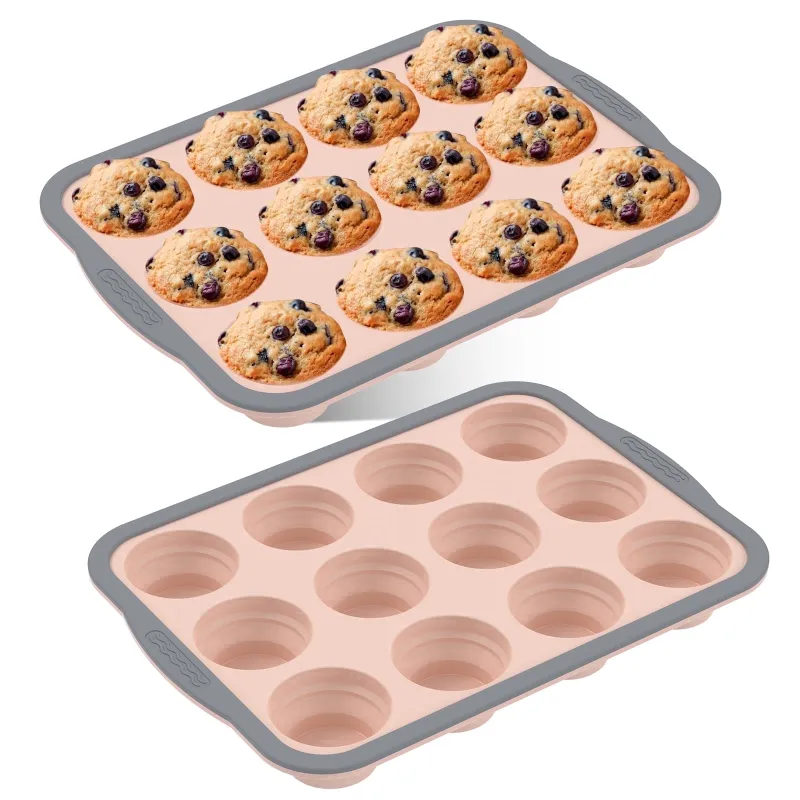
But a quieter counter-movement has been building for years. Smaller, more classically proportioned muffins—the kind your grandmother might have pulled from a standard 12-cup tin on a Sunday morning—are making a comeback, championed by bakers who argue that restraint produces a better crumb, a more balanced flavor, and a product that doesn't require two hands and a bib to eat.
So who's right? Honestly? Both sides have a real case to make. But the why behind each approach is where things get genuinely interesting.
The Science of the Dome
Let's start with structure, because this is Muffin Headland and we love a good baking science conversation.
That dramatic, high-domed top you see at artisan bakeries isn't purely aesthetic—it's the result of deliberate choices made before the batter ever hits the oven. Three variables matter most: batter viscosity, fill level, and oven temperature.
High-rise muffins typically start with a thicker batter. When batter has more body—thanks to higher ratios of flour or fat—it holds its shape as it expands upward rather than spreading out sideways. Fill the cups anywhere from three-quarters full to completely flush with the rim, and you've given that batter room to climb.
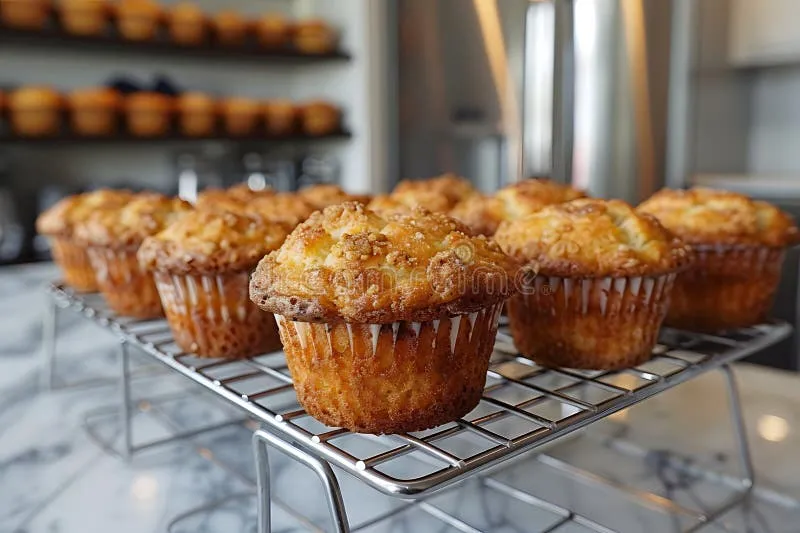
Then comes the heat trick. Many professional bakers who chase the dome start their muffins at a higher temperature—somewhere in the 400°F to 425°F range—for the first several minutes of baking. That initial blast of heat causes rapid steam expansion before the outer crust has time to set, essentially forcing the batter upward. Once the structure begins to firm, the temperature drops to finish the bake evenly. The result is that signature volcanic peak.
Flatter, more even muffins come from the opposite philosophy: lower temperatures (around 350°F to 375°F), standard fill levels (two-thirds full is the classic rule), and batters with slightly looser consistency. The rise is gentler, the top sets before it has a chance to surge dramatically, and you get that smooth, rounded cap that fits neatly into a liner without drama.
Neither method is wrong. They're just solving for different goals.
Regional Preferences Are Real—and Kind of Fascinating
Ask bakers across the country what their customers expect, and you'll notice geographic patterns pretty quickly. In major coastal cities—New York, LA, Seattle—oversized, heavily loaded muffins have become almost standard. The coffee shop culture in these markets rewards visual impact. A muffin needs to look impressive on an Instagram grid as much as it needs to taste good.
In the Midwest and parts of the South, the expectations tend to skew more traditional. Bakers in those regions often describe their customers as skeptical of anything that looks like it's trying too hard. A muffin that's too tall can actually read as wasteful or showy—qualities that don't always land well in communities where home baking is still a regular practice and people have strong memories of what a "real" muffin is supposed to look like.
There's also a practical angle. Oversized muffins require jumbo tins, more batter per unit, longer bake times, and higher food costs. For small independent bakeries operating on tight margins, producing a slightly smaller muffin that's impeccably flavored can be a smarter business decision than chasing the dome for its own sake.
What Professional Bakers Actually Think
Spend time talking to working pastry chefs and you'll find that most of them are less dogmatic about shape than the internet might suggest. What they are passionate about is intentionality. A muffin should look the way it looks on purpose.
The bakers who produce high-rise muffins will tell you the dome signals freshness and craftsmanship—it's visual proof that the leavening is working and the batter was handled correctly. Let your muffins go flat or sink in the middle and customers notice immediately. The dome is a quality indicator as much as it is a style choice.
On the other side, bakers who favor the classic shape often argue that chasing height can actually compromise texture. Overfilling muffin cups and cranking the oven temperature creates a crust that browns unevenly, sometimes leaving the interior underdone while the outside looks finished. A properly baked, modestly sized muffin, they'll say, has a more consistent crumb from edge to center—and that's what you actually taste.
Both arguments are valid. Which is kind of the point.
So What Should You Be Baking?
Here at Muffin Headland, we're not here to tell you there's one right answer. What we will say is that understanding the mechanics behind muffin shape gives you real control over your results—and that's worth more than any single recipe.
If you're after that bakery-style dome, start by thickening your batter slightly (a tablespoon or two of extra flour can make a meaningful difference), fill your cups generously, and try bumping your oven to 415°F for the first five minutes before dropping to 375°F for the remainder of the bake. Keep a close eye on color—you want golden, not dark.
If you prefer a more classic profile, stick to the two-thirds fill rule, use a moderate, consistent temperature, and resist the urge to overmix. Overmixing develops gluten and can cause irregular rising, which ironically makes it harder to get that smooth, even top you're going for.
And if you're somewhere in between? That's fine too. Most home bakers land in a middle zone where the muffins are nicely rounded, maybe with a little lift, and completely delicious—which, at the end of the day, is the only metric that really counts.
The Muffin Is Whatever You Need It to Be
The debate over muffin shape is really a debate about values—indulgence versus tradition, spectacle versus substance, the bakery case versus the home kitchen. Different bakers bring different answers because they're serving different people with different expectations.
What's fun about being a home baker is that you don't have to pick a side permanently. You can bake towering, dramatic muffins for a weekend brunch and turn around and make a quiet, classic batch for Tuesday morning. The science will support you either way.
Just know what you're going for before you preheat the oven. That's really the whole secret.