Little Hands, Big Batter: The Parent's Playbook for First Muffin Bakes
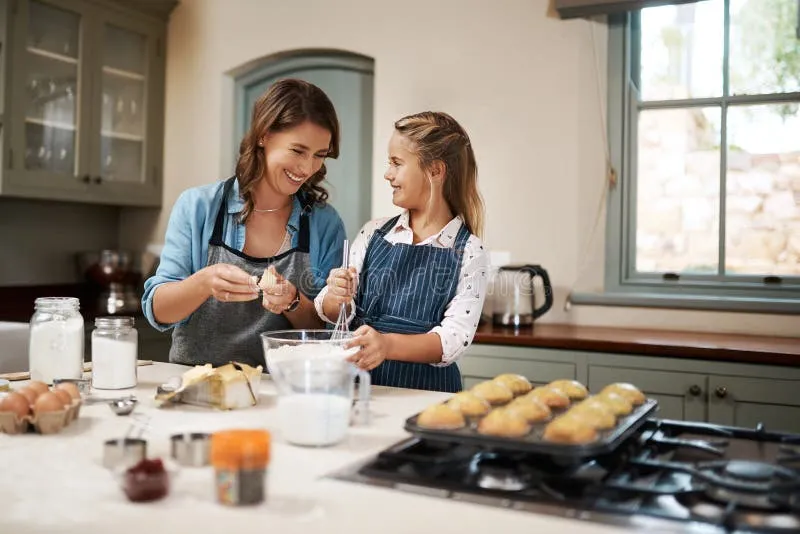
Photo: children baking muffins with parent in home kitchen measuring ingredients, via thumbs.dreamstime.com
If you want to know why muffins are the undisputed champion of first-time kid bakes, you have to understand what's happening in the batter. Muffins belong to a family of baked goods called quick breads, and their defining trait is chemical forgiveness: a generous dose of baking powder, a tender crumb structure, and — critically — a batter that actually gets worse if you overwork it.
Read that again, parents. A muffin batter that gets mixed sloppily by a four-year-old is often better than one mixed carefully by you. The gluten in flour develops with agitation, and more gluten means tough, chewy muffins. Your kid's lumpy, half-folded batter? That's exactly what the recipe wants. There may be no other baking project where a child's technique is an asset rather than a liability.
Why the Science Is on Your Side
Beyond the gentle-mixing advantage, muffins have three built-in safety nets:
- Leavening redundancy. Most recipes use both baking powder and baking soda, so even if the batter sits while someone has a meltdown about who gets the scoop, the rise survives.
- Moisture buffer. Yogurt, applesauce, mashed banana, or oil-based fats keep the crumb tender even if the batch is slightly overbaked by an anxious assistant.
- Portion independence. Twelve individual muffins means one collapsed dome doesn't sink the whole project. Every cup is its own little victory.
Age-by-Age Task Assignments
Ages 2–3: The Sensory Crew. Dumping pre-measured ingredients into the bowl, dropping liners into the tin (crooked is fine), sprinkling tops with sugar. Attention span: one song's worth. Plan for it.
Ages 4–5: The Apprentice. Cracking eggs into a separate bowl (fish out shells with a spoon — teachable moment), mashing bananas, stirring with supervision, scooping batter with an ice cream scoop. The scoop is the great equalizer — it gives small hands control and keeps portions even.
Ages 6–8: The Sous Chef. Measuring dry ingredients with the spoon-and-level method, folding in blueberries or chips, setting the timer, reading the recipe steps aloud. This is also the age to explain the why: why we don't stir the lumps out, why the oven has to preheat fully.
Ages 9+: The Lead. Scaling the recipe, managing the whole mixing sequence, testing doneness with a toothpick. Your job shifts from director to quality control.
Mess Containment: The Real Strategy
Forget perfection. The goal is contained chaos:
- Put a large towel or sheet under the mixing station. When the flour hits the floor — it will — you sweep up the towel and move on.
- Measure everything into small bowls before the kids arrive. Bakers call this mise en place; parents call it survival.
- One egg-cracking bowl, always. Never crack directly into the batter.
- Give each child one job at a time. Two kids, one bowl, zero supervision of who-scooped-last is how flour wars begin.
Recipes That Tolerate Enthusiasm
Pick batters with moisture reserves and simple mix-ins. Banana muffins (overripe bananas are basically pre-mashed by nature), pumpkin muffins, and basic blueberry all forgive heavy hands and slightly off measurements. Skip anything with a streusel or a swirl until round three.
The Part That Actually Matters
The muffins will be imperfect. Some will be lopsided. One might be missing entirely because a certain someone ate the batter. None of that is the point. The point is a kid who learns that you can take simple ingredients and make something real with your hands — and a family tradition that starts with a tin, an oven, and a Saturday morning with nowhere else to be.