Box vs. Bowl: What's Really Inside That Muffin Mix (And Why Scratch Always Wins)
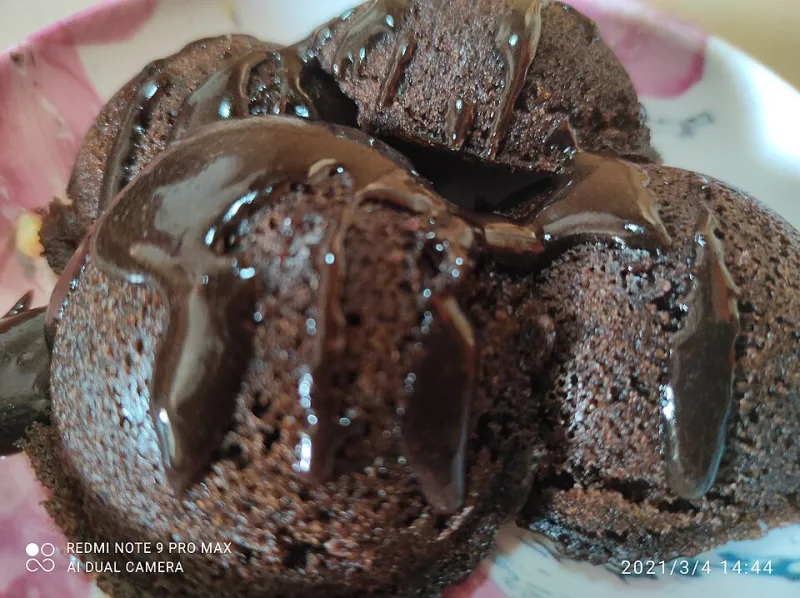
Photo: Nishant20060321, CC BY-SA 4.0, via Wikimedia Commons
Walk down the baking aisle at any Target or Walmart and you'll find an entire wall of muffin mixes promising bakery-quality results with minimal effort. The pitch is compelling: just add water, oil, and an egg, and you're done. But here at Muffin Headland, we've spent a lot of time thinking about what actually makes a muffin worth eating — and the answer almost never lives inside a cardboard box.
This isn't a takedown of convenience. Life gets busy, and we get it. But understanding why scratch-baked muffins consistently outperform their boxed counterparts is genuinely useful knowledge — both for the home baker who wants to understand the science and for anyone looking to make smarter choices in the kitchen.
The Ingredient List Doesn't Lie
Flip over a popular box of blueberry muffin mix and read the ingredient panel. You'll typically find enriched bleached flour, sugar, and then a cascade of items that sound more like a chemistry syllabus than a recipe: sodium aluminum phosphate, mono- and diglycerides, xanthan gum, soy lecithin, and artificial flavors.
Each of these has a specific job. Sodium aluminum phosphate is a leavening acid — it reacts with baking soda to produce the carbon dioxide bubbles that make muffins rise. It works reliably across a wide range of temperatures and humidity levels, which is exactly what a manufacturer needs when their product might sit on shelves from Phoenix to Portland for six months. But it leaves a faintly metallic aftertaste that trained palates can pick up, especially in a delicate crumb.
Mono- and diglycerides are emulsifiers derived from fats. Their role is to keep the fat and water in your batter from separating, producing a consistently smooth texture even if you slightly over- or under-mix. That sounds helpful, but it also means the mix is engineered to be forgiving in ways that actually mask the baker's touch. The silky crumb you get from properly creaming real butter or gently folding in fresh oil? An emulsifier can approximate it, but it can't replicate it.
Xanthan gum is a stabilizer that gives the batter body and helps retain moisture during shelf storage. It's the same ingredient used in gluten-free baking to mimic the stretch of gluten — which tells you something about how far removed these mixes are from traditional flour-and-butter chemistry.
What Fresh Ingredients Actually Do
When you bake from scratch, you're working with ingredients that are alive with flavor potential. Real butter contributes fat-soluble flavor compounds that develop during baking, producing that rich, slightly nutty taste you associate with a great muffin. Fresh eggs provide lecithin (a natural emulsifier) along with proteins that set the structure and yolks that add color and depth. Whole milk or buttermilk brings natural acids that react beautifully with baking soda, creating a lighter, more complex lift than any synthetic leavening blend.
The difference shows up most clearly in blind taste tests. We ran an informal tasting at Muffin Headland with a group of a dozen home bakers comparing a leading store-bought blueberry muffin mix against a simple scratch recipe using the same fruit. The results weren't close. Every taster described the scratch muffin as having a "cleaner" flavor, a more tender crumb, and a top that had actual caramelized texture rather than the uniform, slightly gummy surface of the box version. Several noted that the boxed muffin tasted "flat" or "sweet without flavor" — which makes sense, because refined sugar without the counterbalance of real fat and acid reads as one-dimensional on the palate.
The Shelf Life Trade-Off
Here's the honest truth about why those additives exist: they're not there to make your muffin taste better. They're there to make it survive. A commercial muffin mix needs to stay stable for 12 to 18 months at room temperature. That requires controlling moisture activity, preventing fat oxidation, and ensuring the leavening agents don't fire prematurely.
At home, you don't have that problem. You're baking today, eating today (or tomorrow at the latest). That freshness window is your biggest advantage over any box on a shelf. You can use real vanilla extract instead of artificial flavor. You can add a tablespoon of sour cream to the batter for moisture and tang. You can fold in fresh or frozen blueberries instead of the dehydrated, dye-coated versions packed in some mixes. None of that is complicated — it just requires you to trust your kitchen a little more than the instructions on a box.
The Middle Ground: Upgrading a Box Mix
Okay, real talk: sometimes you do reach for the box. Maybe you're baking with kids on a Sunday afternoon and don't want to measure out six different dry ingredients. That's fine. But you can still close the gap between box and scratch with a few easy swaps.
- Swap water for whole milk or buttermilk. The fat and protein in milk add richness that water simply can't provide.
- Add a tablespoon of melted butter alongside (or instead of) the called-for oil. Butter's flavor compounds survive baking in a way that neutral oils don't.
- Throw in a teaspoon of real vanilla extract. Most mixes rely on vanillin — a synthetic compound — and the real thing makes a noticeable difference.
- Add a pinch of kosher salt even if the recipe doesn't call for it. Commercial mixes tend to be under-salted to appeal to the broadest possible audience; a little salt wakes up every other flavor in the batter.
- Fold in fresh fruit or mix-ins. Replacing the mix's included fruit packet with real berries, chocolate chips, or chopped nuts immediately elevates the final product.
These tweaks won't transform a box mix into a from-scratch masterpiece, but they'll get you noticeably closer — and they take about 90 seconds of extra effort.
Why Scratch Doesn't Have to Be Scary
One of the biggest myths in American home baking is that scratch baking is hard. It isn't — at least not when it comes to muffins. A basic muffin recipe is literally two bowls and a spatula. Wet ingredients in one, dry in another, combine until just mixed, into the tin, into the oven. That's it. The whole process takes maybe 15 minutes of active work.
The intimidation factor is largely manufactured by the convenience food industry, which has spent decades convincing us that baking is a complicated, failure-prone activity best left to professionals or at least to the people who designed the box. Don't buy it.
At Muffin Headland, we believe that baking from scratch is one of the most satisfying things you can do in a kitchen. Not because it's hard, but because it isn't — and the result is something no cardboard box can touch. A muffin made with real butter, fresh eggs, and a little patience carries something that no emulsifier or stabilizer can replicate: the flavor of someone who actually cared about what they were making.
And that, ultimately, is what baked with love really means.