Pan Up: What Your Muffin Tin Is Made Of Matters More Than You Think
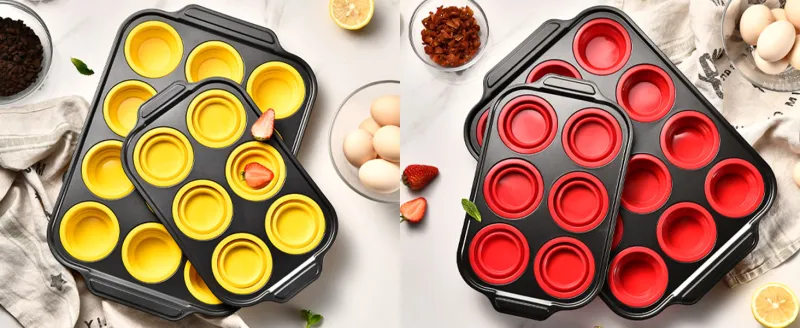
Photo: assorted muffin tins silicone steel ceramic baking pans on kitchen counter, via m.media-amazon.com
Let's be honest — most of us grabbed whatever muffin tin was on sale and called it a day. Maybe it's a beat-up nonstick pan that's been through three apartments and a cross-country move. Maybe it's a silicone mold your aunt gave you as a housewarming gift that you've never quite trusted. Whatever's sitting in your cabinet right now, there's a good chance you've never stopped to wonder whether it's actually the right tool for the job.
Here at Muffin Headland, we think about this stuff so you don't have to — and then we tell you about it so you absolutely do have to. The truth is, your pan material is doing a lot of quiet, invisible work every time you bake. It affects how fast heat travels to your batter, how deeply your muffins brown, whether they release cleanly, and even the texture of that all-important bottom crust. So let's break it all down, material by material.
The Classic: Aluminum and Steel Pans
Standard aluminum and aluminized steel pans are the workhorses of the baking world, and for good reason. Metal is an excellent conductor of heat, which means it gets hot fast and distributes that heat fairly evenly across the cup surface. The result? Muffins with a nicely set structure, good lift, and a golden-brown exterior that actually has some color to it.
Light-colored aluminum pans are generally the go-to recommendation from professional bakers because they heat up quickly without over-browning the bottoms. Darker steel pans absorb more radiant heat from the oven, which can push browning a little further — sometimes great for a crunchier base, sometimes a little too much if your oven already runs hot.
The catch with uncoated metal pans is that you need to grease them properly or use paper liners, or you'll be spending twenty minutes trying to coax muffins out of the cups with a butter knife. Still, for everyday baking — blueberry muffins, morning glory, classic banana — a good aluminum pan is hard to beat.
Best for: Everyday muffins, recipes that benefit from a well-browned crust, high-volume baking.
The Convenient Option: Nonstick Coated Pans
Nonstick pans are everywhere, and they're popular for an obvious reason: cleanup is a breeze. Most nonstick muffin tins have a dark coating, which means they absorb heat more aggressively than bare aluminum. That can work in your favor when you want a deeply set bottom, but it's worth dropping your oven temperature by about 25°F compared to what the recipe calls for if you're using a very dark nonstick pan.
One real concern with nonstick is longevity. The coating scratches, chips, and degrades over time — especially if you're using metal utensils or running it through the dishwasher on the regular. Once the surface starts showing wear, it's time to replace it. And while modern PFOA-free coatings are safer than older generations, plenty of bakers prefer to skip nonstick altogether and just use good old butter and flour.
That said, for beginner bakers or anyone who dreads the cleanup, a quality nonstick pan is a perfectly reasonable choice. Just treat it gently.
Best for: Quick weekday baking, beginners, recipes with sticky mix-ins like caramel or fruit.
The Flexible Wildcard: Silicone Molds
Silicone muffin molds have a bit of a reputation problem. Bakers either swear by them or roll their eyes at the mention. The reality is somewhere in the middle — they're genuinely useful, just not for everything.
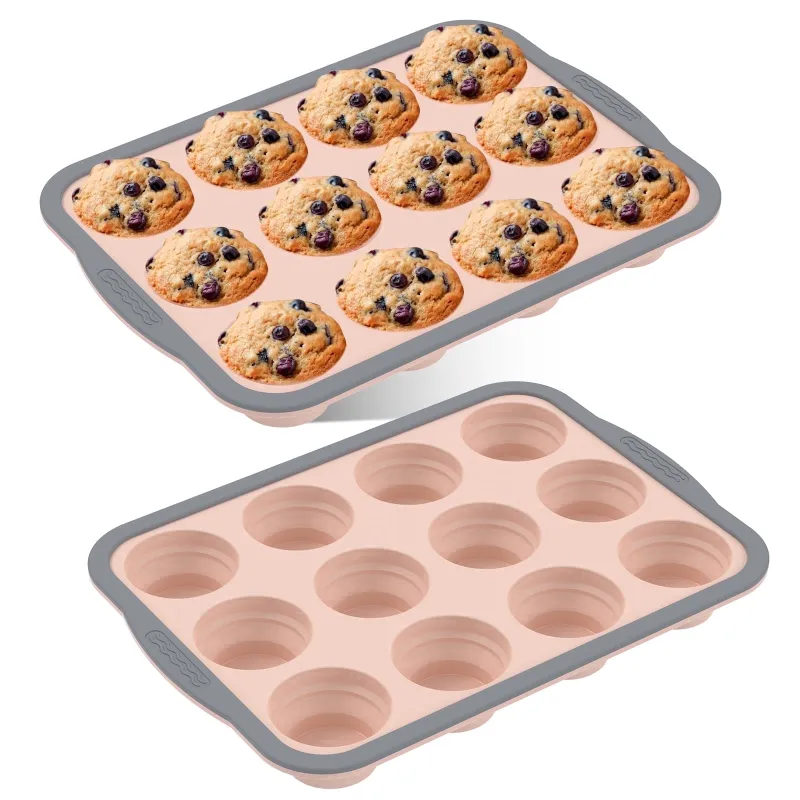
Because silicone is a poor conductor of heat, your muffins will bake more slowly and won't develop the same golden-brown crust you'd get from metal. The upside is that they're nearly impossible to stick, which makes them fantastic for delicate recipes or anything with a very low fat content. They're also great for mini muffins, novelty shapes, and frozen treats.
The biggest practical tip: always place your silicone mold on a rigid baking sheet before filling it. Silicone is floppy, and trying to carry a full, wobbly mold from the counter to the oven is a recipe for a batter disaster on your kitchen floor.
For muffins where you really care about texture and browning — think a classic corn muffin or a streusel-topped bakery-style muffin — silicone probably isn't your best friend. But for a simple chocolate muffin or a protein-packed egg cup? It works just fine.
Best for: Delicate or low-fat recipes, novelty shapes, easy release without greasing, frozen muffin cups.
The Artisan Choice: Ceramic and Stoneware Pans
Ceramic and stoneware muffin pans heat up slowly and hold that heat for a long time. That steady, even warmth is genuinely wonderful for certain recipes — dense, moist muffins like pumpkin spice or zucchini chocolate chip tend to bake beautifully in ceramic because the gentle heat gives the center time to set without the outside racing ahead.
The downside is that ceramic takes longer to preheat, and it can be unpredictable in ovens that have hot spots. It's also heavier than metal or silicone, and you need to be careful with thermal shock — don't pull a ceramic pan straight from the freezer into a hot oven.
Stoneware pans are especially good if you're going for a rustic, homemade aesthetic and you're not in a rush. They also look beautiful on the table, which is a completely valid reason to own one.
Best for: Dense, moist muffin varieties, slow baking, presentation, bakers who prioritize even interior cooking over crust.
The Heavy Hitter: Cast Iron Muffin Pans
Cast iron muffin pans — sometimes called gem pans or popover pans — are a bit of a specialty item, but they're worth knowing about. Cast iron retains heat exceptionally well and, once properly seasoned, develops a naturally nonstick surface. Muffins baked in cast iron get a seriously crispy, deeply browned exterior that you simply cannot replicate with other materials.
The trick with cast iron is preheating. Many bakers preheat the pan in the oven before adding batter, which creates an almost immediate sear on contact — the same principle behind a good skillet cornbread. This gives you a dramatic, crunchy base and sides that are genuinely special.
Cast iron is heavy, takes time to heat up, and requires a little maintenance (seasoning, hand washing, drying immediately). But if you're the kind of baker who gets excited about cornbread muffins or savory herb popovers, a cast iron gem pan is a game-changer.
Best for: Cornbread muffins, savory muffins, recipes where maximum crust is the goal, serious baking enthusiasts.
So Which Pan Should You Actually Buy?
Honest answer: ideally, more than one. A light-colored aluminum pan covers 80% of everyday baking needs and should probably be in every kitchen. A silicone mold is a low-cost addition that earns its keep for specialty recipes and easy cleanup days. And if you're building out your baking arsenal over time, a ceramic or cast iron pan adds real versatility for specific styles.
If you can only have one, go aluminum. It's reliable, affordable, widely available at stores like Target or Williams Sonoma, and it plays well with virtually every muffin recipe you'll ever make.
The best muffin pan is ultimately the one you understand — its quirks, its tendencies, and how to work with it rather than against it. Get to know your pan, adjust your technique accordingly, and you'll be pulling beautiful muffins out of the oven regardless of what it's made of.