Tender vs. Toothsome: Cracking the Code on Muffin Crumb Structure
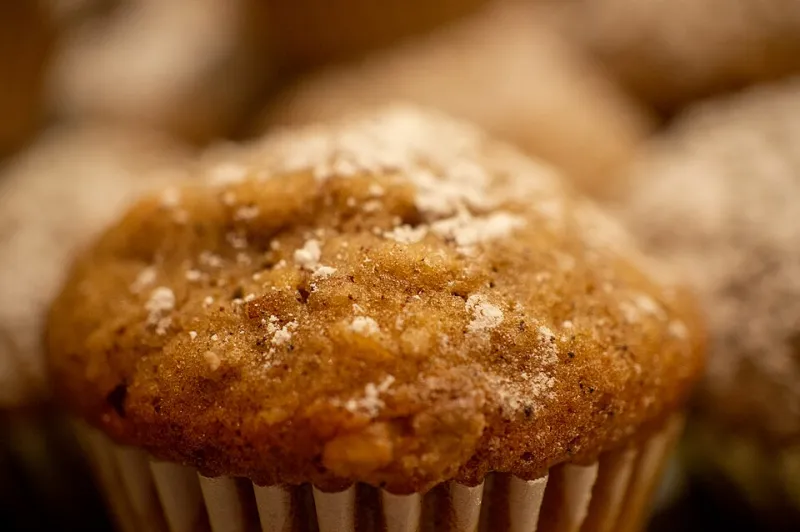
Photo: Connor Slade, CC BY-SA 4.0, via Wikimedia Commons
Ever wonder why your local bakery's blueberry muffin practically melts on your tongue while a bran muffin from the next shop over has a satisfying, chewy bite? The answer lives inside the crumb — and once you understand what's happening at a structural level, you can dial your muffins in exactly the way you want them. Crumb structure isn't random. It's the result of a handful of very deliberate choices made before the pan ever hits the oven.
What We Actually Mean by "Crumb"
In baking, "crumb" refers to the interior texture of a finished baked good — the network of tiny air pockets, starch granules, and protein strands that give it its feel in your mouth. A fine crumb is tight, even, and soft. Think of a classic vanilla bakery muffin where every bite is pillowy and uniform. A coarse crumb is more open, with irregular air pockets and a slightly denser chew. Think of a hearty corn muffin or a rustic bran muffin you'd grab alongside a bowl of chili.
Neither is better. They're just different tools for different jobs. The trick is knowing which levers to pull to get the one you're after.
Flour Protein: The Biggest Variable You're Probably Ignoring
If crumb structure had a single most important ingredient, it would be flour — specifically, the protein content of the flour you're using. When flour meets liquid and gets mixed, proteins called glutenin and gliadin link up to form gluten. More gluten means more structure, which translates to a chewier, coarser crumb. Less gluten means a more tender, delicate bite.
All-purpose flour, the standard for most American home bakers, has a protein content somewhere between 10% and 12%. That middle ground works fine for a lot of recipes, but if you want to push toward either extreme, consider swapping it out.
- For a finer, more tender crumb: Reach for cake flour, which clocks in around 7–9% protein. It produces noticeably softer muffins — great for delicate flavors like lemon poppy seed or classic vanilla.
- For a coarser, heartier crumb: Bread flour (12–14% protein) or a mix of whole wheat and all-purpose will give you more structure and a more substantial bite. Perfect for morning glory muffins loaded with carrots and nuts, or anything with oats mixed in.
The Mixing Method Matters — A Lot
Here's where a lot of home bakers accidentally override all their careful ingredient choices: the mixing stage. Overmixing muffin batter is the single fastest way to wreck your crumb texture, and it happens constantly.
Muffins typically use what bakers call the "muffin method" — dry ingredients and wet ingredients are mixed separately, then combined with minimal stirring. The goal is to just barely bring the batter together. A few streaks of flour? Totally fine. Lumps? Also fine. The moment you chase those lumps down with your spatula and stir until everything is perfectly smooth, you've overdeveloped the gluten and traded a tender crumb for a tough, tunnel-riddled one.
But here's the flip side: if you actually want a coarser, more textured crumb — say, for a heartier multigrain muffin — a slightly more thorough mix isn't a disaster. The extra gluten development gives you that chewier bite intentionally. Just don't go overboard; you still don't want tunnels (those long vertical air channels that form when steam escapes through overdeveloped gluten).
Quick rule of thumb:
- Delicate muffins = stir until just combined, even if it looks lumpy
- Hearty muffins = a few extra folds are okay, but stop before the batter looks smooth and stretchy
Fat Type and Quantity: Tenderness on Demand
Fat interrupts gluten formation by coating the flour proteins before they can link up. More fat equals a softer, more tender crumb. This is why oil-based muffins tend to have a finer, moister crumb than butter-based ones — oil coats flour proteins more evenly and stays liquid at room temperature, keeping things tender even after cooling.
Butter, on the other hand, adds flavor and a slightly more structured crumb because it contains water (which activates gluten) and solidifies as it cools. If you want a fine crumb and rich butter flavor, try using melted butter rather than creamed — it behaves more like oil and gives you the best of both worlds.
Sour cream, Greek yogurt, and buttermilk are also crumb-softeners. Their acidity slightly weakens gluten strands, contributing to that pillowy texture you get from a really good bakery muffin.
Oven Temperature: The Crumb's Final Frontier
Once your batter hits the oven, temperature takes over as the final crumb-shaping force. High heat (400°F and above) causes rapid steam expansion, which creates bigger, more irregular air pockets — contributing to a coarser, more open crumb. It also drives that gorgeous dome on top (more on that in another article). Lower heat (350°F range) bakes more gently and evenly, producing a finer, more uniform crumb.
Many bakeries actually use a two-stage approach for the best of both worlds: start high (425°F) for the first 5 minutes to get the rise and dome going, then drop to 375°F for the remainder of the bake. This gives you a dramatic crown with a fine, even interior crumb.
Troubleshooting Common Crumb Problems
Even armed with all this knowledge, things go sideways sometimes. Here's a quick diagnostic guide:
Crumb is too dense and gummy: Underbaked, or too much liquid in the batter. Check your ratios and make sure your leavening (baking powder/soda) is fresh.
Crumb is too dry and crumbly: Not enough fat or liquid, or overbaked. Try adding a tablespoon or two more oil or swapping some milk for sour cream.
Crumb has long tunnels running through it: Classic overmixing. Ease up on the stirring next time.
Crumb is uneven — fine in some spots, coarse in others: Ingredients weren't fully at room temperature, or the batter wasn't evenly mixed before portioning. Let your eggs and dairy warm up a bit before you start.
Crumb is tougher than expected despite careful mixing: Your flour protein content might be higher than you think. Try swapping in some cake flour, or add an extra tablespoon of fat.
Putting It All Together
Mastering crumb structure is really about understanding that every single decision you make — from the flour you pull off the shelf to how long you run your spatula through the bowl — adds up to the texture in your finished muffin. There's no one-size-fits-all answer, and that's actually the fun part.
Want a muffin that feels like a cloud? Go low-protein flour, oil, buttermilk, and a gentle hand with the mixing. Want something sturdy enough to fuel a long hike or a serious work morning? Whole wheat flour, a little extra mixing, and a higher bake temp will get you there.
At Muffin Headland, we believe that understanding your ingredients is what separates a good muffin from a great one. Once you get comfortable playing with these variables, you'll stop guessing and start baking with intention — and that's when things really get delicious.